Wheezing (which takes the form of a high-pitched whistling sound) is
common among many individuals. According to a study conducted by a group
of professors in 2014, about 56.34%  of participants used to suffer from
this condition. Wheezing can be serious. If left untreated it can
lead to bronchitis and pneumonia, endangering your life.

What Causes Wheezing?

People who have asthma or respiratory problems are the most vulnerable to
wheezing. Wheezing is a result of the airway passages getting blocked
due to dust, mucus, sputum or phlegm. With the airway path obstructed,
oxygen cannot move easily. Some other causes of wheezing might come from:

• A constant and severe cough and cold
• Anaphylaxis (an allergic response that hinders, congests
and hurts the air path)
• Swallowing a foreign object
• Inflammation, constriction, irritation of the vocal cord
• Dust or pollution
• Acidity and acid reflux
• Smoking, or second-hand smoke
• Family history of wheezing

1. Steam therapy
One of the easiest and fastest ways to stop wheezing is through
steam therapy which helps to get rid of dust, mucus or thick phlegm
that has obstructed and clogged your throat. Just pour boiling water
into a large bowl and add some drops of essential oil, either peppermint
or eucalyptus oil. Cover your head with a towel and lean over the bowl.
Inhale the steam emitted from the hot water through your nose and also
through your mouth for 10 to 15 minutes.  Repeat twice a day.

2. How shower
Hot showers help reduce dust, phlegm and mucus. Simply take a hot shower
for about 5 minutes, allowing the bathroom to steam, like a sauna.
Do so twice a day. This natural remedy will also help open your pores,
removing dust from your body.

3. Warm fluids
Drinking warm fluids can help soothe your airways. Opt for warm water.
This helps prevent mucus from developing in the airway tracts. Furthermore,
if you're experiencing wheezing, consume hot soups or porridge instead of
solids as this can make the situation worse, provoking buildups. Drink
herbal teas like ginger, licorice or chamomile to keep wheezing at bay
and stay away from dairy products.

4. Gargle with salt water
Salt water contains anti-bacterial properties. So gargling may help reduce
wheezing or coughing by eliminating the mucus clinging to your airway passages.
Simply add 1/2 teaspoon of salt into a cup of warm water, stirring until the
salt dissolves. Gargle within 30 to 60 seconds and repeat every hour.

5. Use nasal drops
Nasal drops can help ease your wheezing situation. Just two to three drops
can help your breathe more easily instantly. Prior to using this treatment,
ask your doctor for advice.

6. Garlic
Garlic is full of medicinal properties. It can be used to enhance the
immune system, which helps combat sickness and diseases. Garlic will help
eliminate the bacteria blocking the airway passages. If you are unable to
take it raw, cook with garlic as often as you can.

wheezing
7. Ginger
Ginger is an excellent remedy for respiratory issues like asthma,
coughing, wheezing and the flu. It cleans and gets rid of blockages
in breathing tubes, and reduces and prevents inflammation. This will
ultimately lead to a decrease in wheezing. Either eat alone, or mixed
with salads. Drink ginger tea, either alone or together with honey.

8. Figs
A rich source of vitamins and minerals, including vitamin A,
vitamin B, zinc and iron, figs are believed to heal inflammation
in the throat and airway tube by draining out extra mucus. Figs
are also said to relieve pain and decline stress on the vocal cords.
Simply soak them overnight. Next morning, eat the soaked figs and
drink the soaking water.


9. Yogurt
It may come as a surprise that yogurt is able to stop wheezing.
It is rich in vitamin B12 and it's very effective in boosting the
function of the lungs, as well as easing inflammation in the throat
and airway passages. Eat twice a day to fight against coughing and wheezing.

11. Turmeric
Curcumin, found in turmeric makes a wonderful treatment for wheezing.
It can also be used to heal injuries or scars on the body. Just add a
teaspoon of turmeric into warm water, along with honey for extra benefits.
Then stir until it is dissolved completely. Drink the remedy twice a day.

12. Mint
Mint has anti-bacterial and anti-inflammatory properties, which gives
it the ability to ease sore throats, or irritating respiratory problems.
Mint can also help get rid of phlegm clinging to the airway passages as a
result of wheezing.

Sunday, June 11, 2017
[ NATURAL REMEDIES FOR WHEEZING]

Wednesday, June 7, 2017
[ JUICE MADE OF APPLE, CARROT & BEET HAS BEEN MIRACLE CHINESE HEALTH DRINK WORLD OVER.]
Three-Ingredient Apple, Carrot and Beet Superjuice.
In the field of Chinese medicine, a juice that contains apple,
beet, and carrot has, for centuries, been regarded as a
"miracle drink", due to the wealth of benefits it provides
for both mind and body. The wonderful effects of this drink
and the simplicity of these common ingredients have made
it a very popular remedy in many countries around
the world. To prepare this drink you just extract the
juice from each of the ingredients and mix it together.
The vegetables and fruits should be fresh and the juice
must be consumed immediately. Generally, the best time
for drinking it is in the morning on an empty
stomach.The compounds in each of the juice's ingredients
make it an extremely nutritious drink:
• Apples - This fruit is packed with beneficial
antioxidants for the body as well as vitamins such
as A, B1, B2, B6, C, E, and K. Apples also contain
plenty of other nutrients, such as folic acid,
zinc, magnesium, fibre, calcium, and iron.
• Carrots - Carrots are known to be an excellent
source of vitamin A, B1, B2, B3, C, E, and K.
In addition, the carrot has huge amounts of
niacin and pantothenic acid in it, which support
the buildup of minerals such as calcium, potassium,
magnesium, and selenium.
• Beets - Beets contribute to cardiovascular
health and provide nutrients such
as vitamin A, C, B, iron, copper, magnesium,
potassium, and other anti-aging compounds.
The combination of these three powerful ingredients
provide the nutrients
needed to maintain a healthy body throughout the
day, promote good health
and prevent a variety of diseases.


The Benefits

1. It's believed that the antioxidant compounds
of this juice can help prevent cancers and restrict
the growth of cancer cells, protecting them from the
harm of free radicals. By doing this, they are
preventing accumulative damage to the cells that
may eventually evolve into cancerous formations.
2. This juice is known to contribute to the
health of different body organs such as the
liver, kidneys, and pancreas, and prevent the
onset of disease. It does this by purifying your
body from toxins, thereby making the organs'
jobs easier so there's less strain on them
to perform. When organs like the liver don't
have to work so hard, they stay
healthy - and so do you.

3. The beta-carotene and lutein present in
carrots, coupled with the powerful properties
of beets, help promote cardiovascular health.
Furthermore, the properties of the apple help
reduce cholesterol and keep blood pressure
stable - two conditions that can potentially
lead to heart problems. Combined, this juice
is one of the best things you can do for your heart.

4. In Chinese medicine, this drink is associated
with many skin health benefits. Regular consumption
helps remove pimples and blackheads, moisturizes your
skin, combats dryness, improves the appearance of
wrinkles, and revitalizes old tissues.smoothie
5. Many people have testified that this juice
provides excellent support to the functioning of
the digestive system, especially for people who
suffer from ulcers, intestinal problems, and
chronic constipation. Drink it several times a
day for regular bowel movements.

6. The juice provides all the nutrients needed to
maintain good cognitive functions, enhance memory,
and promote concentration. In the long run,
the ingredients in this juice may even help prevent
the onset of some of the neurological diseases that
occur with age.

7. For people who work in front of a computer for long periods of time,
drinking this juice regularly will moisten your eyes and help you avoid
irritation, fatigue, and dryness.

8. The combination of the vitamins and nutrients in these three foods is an
excellent way to strengthen and stimulate the immune system. This is vital
when it comes to fighting and preventing diseases, allergies, and infections.

9. The drink acts as a natural detoxifier that promotes blood purification
and the elimination of toxins. As a result, the production of red blood cells,
that carry oxygen to all of our body parts, increases – making sure our entire
body stays healthy and ‘fed’.

10. Women with intense menstrual symptoms can drink this juice to relieve pain,
reduce inflammation, and prevent menstrual cramps.
Thursday, October 13, 2016
[ About Brain Aneurysms & How to Spot Them.]
Brain aneurysms kill people suddenly every year, yet few of us know what the warning signs of this deadly attack are. Recent estimates suggest that 90% of Americans are not sure what a brain aneurysm really is. And because anything from between 6% to 9% of people actually have an aneurysm, this lack of knowledge is tragic. This necessary guide will give you important information about brain aneurysms, telling you everything you need to know, and explaining what you can do to spot the signs before the worst happens.
Lisa Colagrossi's story

Image courtesy of depositphotos.com
Some of you may know the story of Emmy Award nominated US news anchor, Lisa Colagrossi, who died in 2015 from a brain aneurysm, aged only 49. Lisa was a hard working woman who began to feel excruciating head pain. After discussing it with her husband, she decided to let it pass and get on with her work. Sadly, she was taken ill and died only two weeks after the initial headache passed.
Following this awful turn of events, Lisa’s husband established the Lisa Colagrossi Foundation (LCF) to raise public awareness about the silent killer that had taken her away from him and their two poor children. Her husband understood that it was only a lack of knowledge that prevented Lisa from going to the doctor before it was too late.
This story dramatically illustrates the need for more widely spread knowledge about brain aneurysms.
What is a brain aneurysm?

Image courtesy of depositphotos.com
Neurosurgeon at New York University’s Langone Medical Center, Howard Riina, MD, describes a brain aneurysm as a weakness of the wall in one of the brain’s blood vessels. The weakness lets the wall form a bulge, due to the pressure of the blood running through the vessels. When this bulge becomes over-inflated it can rupture and seep blood into the brain tissue.
This bulge, or aneurysm, is something that anywhere from 6% to 9% of us are walking around with, unaware that it could rupture. They can even be seen on an MRI scan. Yet if the aneurysm is of a tolerably small size, doctors will not recommend invasive and dangerous surgery.
When you suffer a rupture

The frightening description above may give you the idea of blood squirting all over the place, but the truth is not quite so dramatic. There may be a little dribble for a few moments, but generally, a platelet plug naturally forms, according to Riina. However, even this little trickle can be fatal. Between 30% to 50% of sufferers die immediately after a rupture occurs.
The small blood leak irritates the brain tissues it comes into contact with, and this drastically increases pressure within the head. Furthermore, the loss of blood is catastrophic for the brain regions which have lost out. These areas need a constant supply of blood to function as they should.
Pressure and a lack of blood together combine to induce either death or unconsciousness.
Signs and symptoms of rupture

Image courtesy of depositphotos.com
Here are several symptoms that have been reported by those who have suffered a rupture:
• An excruciating headache.
• Neck stiffness,
• Tingling face.
• Light sensitivity.
• Seizures.
• Weak limbs.
• Blurry or double vision.
• Extreme tiredness.
Most of these symptoms are secondary, however, to the headache. Colagrossi’s husband describes this as “W-H-O-L” or ‘the worst headache of your life’. This could be felt anywhere and at any time, though it may be felt more strongly behind the eyes. It is hard to describe this pain, some compare it to being hit by a bolt of lightning, others have said it felt like hearing a gun shot.
http://www.ba-bamail.com/content.aspx?emailid=22922
Friday, October 7, 2016
[ 24 Head-Spinning Facts About Beer.]
Beer is one of the most popular beverages in the world, but how much do you know about this tasty alcoholic drink? Did you know evidence suggests it's about 6000 years old? Did you also know that there are over 400 different kinds? Find out more about this not-so-dry subject in this terrific infographic that will teach you some astounding facts about beer!
Beer facts.
Source:
http://www.ba-bamail.com/content.aspx?emailid=22842
Thursday, August 4, 2016
[ Knee Pain ]
Discomfort in the knees can make everyday tasks seem pretty daunting, from having to walk, to climbing up stairs. Yet, while ensuring that your knees get enough rest is important, keeping your bones and muscles strong by engaging in these knee exercises will help alleviate the pain.Effective home remedies to treat knee pain may also prove to be helpful, but adding to all of this, one remedy you should try is acupressure. Working on specific points, located in your knees can speed up your recovery. Here are some of the vital acupressure points located in this area:
Point A: Calf's Nose:-

Point B: Sunny Side of the Mountain
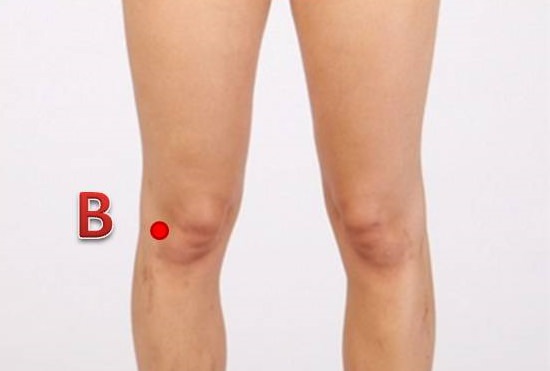
Location: This point is located on the outside of the lower leg, below and in front of the top
of the shinbone.
of the shinbone.
Benefits: Massaging this point will relieve excessive knee pain, muscular tension, aches
and muscle strains.
and muscle strains.
Point C: Three Mile Point:-
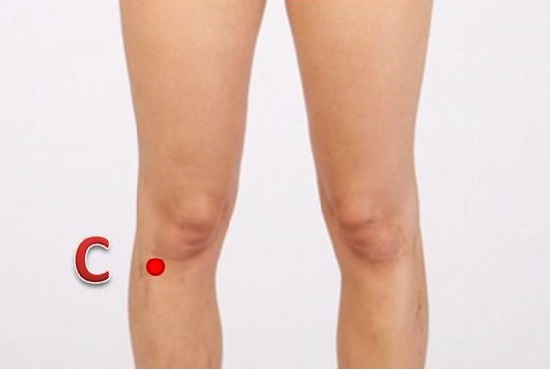
Location: Measure four finger widths below the kneecap and located just on the
outside the shinbone Three Mile Point.Benifits:-
Applying pressure to this point will strengthen your whole body, tone your muscles and
relieve knee pain.
Point D: Commanding Activity.

Location
Location: On the outside of the knee, just where the crease ends when the knee
is bent, you will find the Commanding Activity point.
Benefits: Apply pressure here to relieve knee pain and stiffness.
Point E: Nourishing Valley

Location: On the inner edge of the knee crease, in the hollow between the two tendons.
Benefits: This point alleviates knee pain and abdominal pain.
Point F: Crooked Spring:-

Location: This point is located on the inside of the knee, just where the crease ends when
the knee is bent.
Benefits: Massaging this point relieves knee pain, fibroids and swelling in the knee.
Point G: Shady Side of the Mountain

Located just below the kneecap in the outer indentation.
Benefits: Massaging this point will help relieve knee pain, knee stiffness,
rheumatism of the feet and edema.
Friday, July 8, 2016
[Millets to Combat Diabetes.]
Introduction
Millets consumption has a long legacy and evidences of millets intake has been observed in Harappan archaeological sites and Kalidasa’s legendary literatures. Millets are small-grained, annual, warm-weather cereals belonging to grass family. In Tamil Nadu, besides cholam and cumbu, the millets like finger millet, thinai, kudiraivali, varagu and panivaragu and samai are cultivated which offer the much needed nutritional and livelihood security.
Mix Bisibele bath mix, Pulav, Jeera mix and biriyani.
To meet the Snacks requirement of diabetic patients : Millet Kakkra, Millet bar, Millet laddu, Millet blended chocolate are prepared. Moreover, Nutritious blends like Nutri beverage, Malt and Commercially viable products like Millet based bakery products, extruded products and flaked products are prepared.
Millets Vs Diabetes
A substantial number of Indian children and women are underweight, anaemic and suffer from micronutrient deficiencies which are the indicators of malnutrition. Changes in lifestyle, decrease in diversification of cereals in food basket and increased share of junk foods during the recent period are the few major factors that hinders millets uptake. Research studies indicate that presence of insoluble fibre in millets not only increases intestinal transit times but also reduces the secretion of bile acids and thereby increases insulin sensitivity and lowers the triglycerides.
Workshop on MTCD
Owing to the nutritional superiority with special reference to diabetic patients and to create more awareness on millets among diabetic patients, a workshop was organized at State Planning Commission, under the chairmanship of Vice Chairperson, SPC on 06.02.2014 in which leading diabetologists, dieticians, medical practitioners, processors and food technology specialists apart from policy makers and officers participated.
A small exhibition was organized in association with Adhi Parasakthi Agricultural college, Kalavai, TNAU to make awareness on millets consumption among the public/Govt. servants. Presentations were made by leading diabetic medical practitioners, dieticians and SHG.
Nutritional Superiority
It has been scientifically proven that millets are way ahead of rice and wheat in terms of nutritional content. For instance, millets contain 10.6 grams of protein per 100 grams, as against rice which contains only 6.8 grams. Similarly, millets are also richer in fibre (1.3 grams to 10.1 grams), minerals (1.9 grams to 4.4 grams) and calcium (31 mg to 344 mg) in comparison to rice. In comparison to rice, millets with their low carbohydrate content, low digestibility and water soluble gum content (β–glucan) have been attributed to improve glucose metabolism. These grains release sugar slowly in the blood and also diminish the glucose absorption. For all these superior properties of minor millets, they are designated as nutritious millets.
Agricultural Policy & Planning Division State Planning Commission.
Millets Vs Diabetes
A substantial number of Indian children and women are underweight, anaemic and suffer from micronutrient deficiencies which are the indicators of malnutrition. Changes in lifestyle, decrease in diversification of cereals in food basket and increased share of junk foods during the recent period are the few major factors that hinders millets uptake. Research studies indicate that presence of insoluble fibre in millets not only increases intestinal transit times but also reduces the secretion of bile acids and thereby increases insulin sensitivity and lowers the triglycerides.
Workshop on MTCD
Owing to the nutritional superiority with special reference to diabetic patients and to create more awareness on millets among diabetic patients, a workshop was organized at State Planning Commission, under the chairmanship of Vice Chairperson, SPC on 06.02.2014 in which leading diabetologists, dieticians, medical practitioners, processors and food technology specialists apart from policy makers and officers participated.
A small exhibition was organized in association with Adhi Parasakthi Agricultural college, Kalavai, TNAU to make awareness on millets consumption among the public/Govt. servants. Presentations were made by leading diabetic medical practitioners, dieticians and SHG.
Record of discussion of the interactive meeting on Millets to Combat Diabetes held on 06.02.2014 at State Planning Commission
The meeting was chaired by Tmt. Santha Sheela Nair, IAS.,(Retd.), Vice Chairperson, State Planning Commission.
Thiru. M. Balaji,IAS, Member Secretary, State Planning Commission welcomed the participants.
Dr. K. Ramasamy, Member (Agri & Irri) SPC & Vice Chancellor Tamil Nadu Agricultural University
and Dr. K. Sridhar, Member (Health) briefed about the importance of millets in dietary schedule of diabetic patients.
The low glycemic index nature of millets and nutritional superiority of millets were highlighted. Triglycerides and non-esterified fatty acids leading to insulin resistance.
The higher Glycemic Index/ Glycemic Load of the Indian diet due to intake of refined grains may play an important role in making Indians more susceptible to diabetes compared to Europeans, Chinese and other races. A study on Urban Indian Population to study the association of dietary carbohydrates & Glycemic load with risk of type - 2 diabetes mellitus conducted by the presenter among 1843 adults indicated that total dietary carbohydrates and glycemic load are associated with increased risk of T2DM.
Millets consumption has a long legacy and evidences of millets intake has been observed in Harappan archaeological sites and Kalidasa’s legendary literatures. Millets are small-grained, annual, warm-weather cereals belonging to grass family. In Tamil Nadu, besides cholam and cumbu, the millets like finger millet, thinai, kudiraivali, varagu and panivaragu and samai are cultivated which offer the much needed nutritional and livelihood security.
Mix Bisibele bath mix, Pulav, Jeera mix and biriyani.
To meet the Snacks requirement of diabetic patients : Millet Kakkra, Millet bar, Millet laddu, Millet blended chocolate are prepared. Moreover, Nutritious blends like Nutri beverage, Malt and Commercially viable products like Millet based bakery products, extruded products and flaked products are prepared.
Millets Vs Diabetes
A substantial number of Indian children and women are underweight, anaemic and suffer from micronutrient deficiencies which are the indicators of malnutrition. Changes in lifestyle, decrease in diversification of cereals in food basket and increased share of junk foods during the recent period are the few major factors that hinders millets uptake. Research studies indicate that presence of insoluble fibre in millets not only increases intestinal transit times but also reduces the secretion of bile acids and thereby increases insulin sensitivity and lowers the triglycerides.
Workshop on MTCD
Owing to the nutritional superiority with special reference to diabetic patients and to create more awareness on millets among diabetic patients, a workshop was organized at State Planning Commission, under the chairmanship of Vice Chairperson, SPC on 06.02.2014 in which leading diabetologists, dieticians, medical practitioners, processors and food technology specialists apart from policy makers and officers participated.
A small exhibition was organized in association with Adhi Parasakthi Agricultural college, Kalavai, TNAU to make awareness on millets consumption among the public/Govt. servants. Presentations were made by leading diabetic medical practitioners, dieticians and SHG.
Nutritional Superiority
It has been scientifically proven that millets are way ahead of rice and wheat in terms of nutritional content. For instance, millets contain 10.6 grams of protein per 100 grams, as against rice which contains only 6.8 grams. Similarly, millets are also richer in fibre (1.3 grams to 10.1 grams), minerals (1.9 grams to 4.4 grams) and calcium (31 mg to 344 mg) in comparison to rice. In comparison to rice, millets with their low carbohydrate content, low digestibility and water soluble gum content (β–glucan) have been attributed to improve glucose metabolism. These grains release sugar slowly in the blood and also diminish the glucose absorption. For all these superior properties of minor millets, they are designated as nutritious millets.
Agricultural Policy & Planning Division State Planning Commission.
Millets Vs Diabetes
A substantial number of Indian children and women are underweight, anaemic and suffer from micronutrient deficiencies which are the indicators of malnutrition. Changes in lifestyle, decrease in diversification of cereals in food basket and increased share of junk foods during the recent period are the few major factors that hinders millets uptake. Research studies indicate that presence of insoluble fibre in millets not only increases intestinal transit times but also reduces the secretion of bile acids and thereby increases insulin sensitivity and lowers the triglycerides.
Workshop on MTCD
Owing to the nutritional superiority with special reference to diabetic patients and to create more awareness on millets among diabetic patients, a workshop was organized at State Planning Commission, under the chairmanship of Vice Chairperson, SPC on 06.02.2014 in which leading diabetologists, dieticians, medical practitioners, processors and food technology specialists apart from policy makers and officers participated.
A small exhibition was organized in association with Adhi Parasakthi Agricultural college, Kalavai, TNAU to make awareness on millets consumption among the public/Govt. servants. Presentations were made by leading diabetic medical practitioners, dieticians and SHG.
Record of discussion of the interactive meeting on Millets to Combat Diabetes held on 06.02.2014 at State Planning Commission
The meeting was chaired by Tmt. Santha Sheela Nair, IAS.,(Retd.), Vice Chairperson, State Planning Commission.
Thiru. M. Balaji,IAS, Member Secretary, State Planning Commission welcomed the participants.
Dr. K. Ramasamy, Member (Agri & Irri) SPC & Vice Chancellor Tamil Nadu Agricultural University
and Dr. K. Sridhar, Member (Health) briefed about the importance of millets in dietary schedule of diabetic patients.
The low glycemic index nature of millets and nutritional superiority of millets were highlighted. Triglycerides and non-esterified fatty acids leading to insulin resistance.
The higher Glycemic Index/ Glycemic Load of the Indian diet due to intake of refined grains may play an important role in making Indians more susceptible to diabetes compared to Europeans, Chinese and other races. A study on Urban Indian Population to study the association of dietary carbohydrates & Glycemic load with risk of type - 2 diabetes mellitus conducted by the presenter among 1843 adults indicated that total dietary carbohydrates and glycemic load are associated with increased risk of T2DM.
Tuesday, June 28, 2016
[ Sleep.]
Difficulty Sleeping ?
This Banana Tea Recipe Works Wonders
There are nights when one cannot get to sleep. While
everyone experiences occasional restless nights, if you
regularly find it hard to get back to sleep within
15 to 20 minutes, or if you wake up more than two to
three times per night, your lack of sleep can disrupt your
daily life, so it is worth addressing. While there are a
number of natural remedies and herbs to help put you to
sleep, here's another remedy you can try - in fact,
it is highly recommended.
Banana Tea for Deep Sleep

This organic, banana-infused sleep remedy works wonders
and it tastes great too. But, how does it work? Bananas,
the peels in particular, are loaded with potassium and
magnesium - two vital nutrients that will help you sleep
better. While magnesium will help prevent sleep disturbances,
both nutrients work together to help relax the muscles.
Note: It is also important to use organic bananas,
because they are free of harmful pesticides.
As this recipe requires you to heat the boiled peel,
non-organic bananas should be avoided.
Here's how: Prepare in under 10 minutes and enjoy
every night before bed:

Ingredients

1 organic banana
1 small pot of water
Dash of cinnamon (optional)
Directions

1. Cut both ends off the banana, then place it, peel
and all, into boiling water. Let the banana cook for
around 10 minutes.
2. Use a colander to pour the banana water into a mug.
If you like, you may sprinkle some cinnamon at this point.
Drink the tea one hour before bed time.
3. The left over banana is pretty tasty too. Serve
it on a plate and dig in - skin included.
The texture is soft, gooey and very enjoyable.
How Sleep Deprivation Affects Your Body
When your body doesn't get enough sleep it suffers.
A lack of sleep affects your mood and your short
term memory. Processing simple things can become
challenging and it also affects your emotional response.
A lack of sleep has also been linked to serious
health conditions.

Why Sleeping Pills are Not a Safe Alternative
Almost half of Americans suffer from insomnia or
inadequate sleep. Yet, while it may be tempting to
resort to sleeping pills, they cannot address the
root of the problem. Rather, sleeping pills provide
a short term fix. Furthermore, those frequently
prescribed Benzodiazepines, like Xanax and Valium,
which are used to treat anxiety disorders by increasing
drowsiness can, unfortunately, be worryingly addictive
too. In addition, Barbiturates suppress the central
nervous system and act very much like anaesthetics
and sedatives.
As with all drugs, there's a list of side effects that
accompany sleeping pills. Besides being addictive, they
can cause constipation, dizziness, a tendency to lose
focus and memory, stomach pain, weakness, uncontrollable
shaking and parasombias (doing things without realizing).
Wednesday, June 22, 2016

Sunday, June 19, 2016
[ Craving Unhealthy Foods? You Could Be Low on Nutrients ]
There are instances when our cravings can come on pretty strong - such as when you cannot wait to launch into a packet of crisps or sink your teeth into a soft, sugar coated donut. There may be times when you overwhelmingly desire a slab of cheese or a piece of toast.
Whatever your cravings may be, they can be pretty hard to control when they come into play . However, while there are many theories behind why our cravings occur (from what your mother ate while you were in her womb, to the demand of your second 'gut brain,' or even pregnancy cravings) one other, possibly more plausible theory is that our cravings occur due to a lack of a specific nutrient.
Food cravings correspond to a request from our body. This theory maintains that if you replace foods containing the same nutrients you are actually craving, they might help curb the urge to eat unhealthy snacks. In theory, therefore, it should be possible to eat your way out of a packet of crisps, by replacing your desire with a handful of olives. Of course, there are instances when the food you are craving will have to do - after all, a spinach and seafood salad at the movies instead of a box of buttered popcorn isn't going to cut it.
Nevertheless, as with most things, extremes are hard to sustain. Keep in mind that there is a time and a place for everything. But, when your body is calling for more calcium and fatty acids, you should try opt for a dish of eggplant or some crispy kale over a portion of cheese.
Here are some other solutions to curb your food cravings.
To view a larger version of the chart click on the images.


Tuesday, June 14, 2016
[Karl Landsteiner - Biographical. ]
Karl Landsteiner was born in Vienna on June 14, 1868. His father, Leopold Landsteiner, a doctor of law, was a well-known journalist and newspaper publisher, who died when Karl was six years old. Karl was brought up by his mother, Fanny Hess, to whom he was so devoted that a death mask of her hung on his wall until he died. After leaving school, Landsteiner studied medicine at the University of Vienna, graduating in 1891. Even while he was a student he had begun to do biochemical research and in 1891 he published a paper on the influence of diet on the composition of blood ash. To gain further knowledge of chemistry he spent the next five years in the laboratories of Hantzsch at Zurich, Emil Fischer at Wurzburg, and E. Bamberger at Munich.
Returning to Vienna, Landsteiner resumed his medical studies at the Vienna General Hospital. In 1896 he became an assistant under Max von Gruber in the Hygiene Institute at Vienna. Even at this time he was interested in the mechanisms of immunity and in the nature of antibodies. From 1898 till 1908 he held the post of assistant in the University Department of Pathological Anatomy in Vienna, the Head of which was Professor A. Weichselbaum, who had discovered the bacterial cause of meningitis, and with Fraenckel had discovered the pneumococcus. Here Landsteiner worked on morbid physiology rather than on morbid anatomy. In this he was encouraged by Weichselbaum, in spite of the criticism of others in this Institute. In 1908 Weichselbaum secured his appointment as Prosector in the Wilhelminaspital in Vienna, where he remained until 1919. In 1911 he became Professor of Pathological Anatomy in the University of Vienna, but without the corresponding salary.
Up to the year 1919, after twenty years of work on pathological anatomy, Landsteiner with a number of collaborators had published many papers on his findings in morbid anatomy and on immunology. He discovered new facts about the immunology of syphilis, added to the knowledge of the Wassermann reaction, and discovered the immunological factors which he named haptens (it then became clear that the active substances in the extracts of normal organs used in this reaction were, in fact, haptens). He made fundamental contributions to our knowledge of paroxysmal haemoglobinuria.
He also showed that the cause of poliomyelitis could be transmitted to monkeys by injecting into them material prepared by grinding up the spinal cords of children who had died from this disease, and, lacking in Vienna monkeys for further experiments, he went to the Pasteur Institute in Paris, where monkeys were available. His work there, together with that independently done by Flexner and Lewis, laid the foundations of our knowledge of the cause and immunology of poliomyelitis.
Landsteiner made numerous contributions to both pathological anatomy, histology and immunology, all of which showed, not only his meticulous care in observation and description, but also his biological understanding. But his name will no doubt always be honoured for his discovery in 1901 of, and outstanding work on, the blood groups, for which he was given the Nobel Prize for Physiology or Medicine in 1930.
In 1875 Landois had reported that, when man is given transfusions of the blood of other animals, these foreign blood corpuscles are clumped and broken up in the blood vessels of man with the liberation of haemoglobin. In 1901-1903 Landsteiner pointed out that a similar reaction may occur when the blood of one human individual is transfused, not with the blood of another animal, but with that of another human being, and that this might be the cause of shock, jaundice, and haemoglobinuria that had followed some earlier attempts at blood transfusions.


His suggestions, however, received little attention until, in 1909, he classified the bloods of human beings into the now well-known A, B, AB, and O groups and showed that transfusions between individuals of groups A or B do not result in the destruction of new blood cells and that this catastrophe occurs only when a person is transfused with the blood of a person belonging to a different group. Earlier, in 1901-1903, Landsteiner had suggested that, because the characteristics which determine the blood groups are inherited, the blood groups may be used to decide instances of doubtful paternity. Much of the subsequent work that Landsteiner and his pupils did on blood groups and the immunological uses they made of them was done, not in Vienna, but in New York. For in 1919 conditions in Vienna were such that laboratory work was very difficult and, seeing no future for Austria, Landsteiner obtained the appointment of Prosector to a small Roman Catholic Hospital at The Hague. Here he published, from 1919-1922, twelve papers on new haptens that he had discovered, on conjugates with proteins which were capable of inducing anaphylaxis and on related problems, and also on the serological specificity of the haemoglobins of different species of animals. His work in Holland came to an end when he was offered a post in the Rockefeller Institute for Medical Research in New York and he moved there together with his family. It was here that he did, in collaboration with Levine and Wiener, the further work on the blood groups which greatly extended the number of these groups, and here in collaboration with Wiener studied bleeding in the new-born, leading to the discovery of the Rh-factor in blood, which relates the human blood to the blood of the rhesus monkey.
To the end of his life, Landsteiner continued to investigate blood groups and the chemistry of antigens, antibodies and other immunological factors that occur in the blood. It was one of his great merits that he introduced chemistry into the service of serology
.
Rigorously exacting in the demands he made upon himself, Landsteiner possessed untiring energy. Throughout his life he was always making observations in many fields other than those in which his main work was done (he was, for instance, responsible for having introduced dark-field illumination in the study of spirochaetes). By nature somewhat pessimistic, he preferred to live away from people.
Landsteiner married Helen Wlasto in 1916. Dr. E. Landsteiner is a son by this marriage.
In 1939 he became Emeritus Professor at the Rockefeller Institute, but continued to work as energetically as before, keeping eagerly in touch with the progress of science. It is characteristic of him that he died pipette in hand. On June 24, 1943, he had a heart attack in his laboratory and died two days later in the hospital of the Institute in which he had done such distinguished work.
From Nobel Lectures, Physiology or Medicine 1922-1941, Elsevier Publishing Company, Amsterdam, 1965.
This autobiography/biography was written at the time of the award and first published in the book series Les Prix Nobel. It was later edited and republished in Nobel Lectures. To cite this document, always state the source as shown above.
Karl Landsteiner died on June 26, 1943.
Monday, April 25, 2016
[ A Pain in the Neck etc,etc.]
A crick in the neck can be irritating, painful, and can even cause headaches and upper back pain. To alleviate the tension you might be experiencing in your neck, there are a number of natural treatments you can try at home. In addition, the following simple exercises and stretches are also effective for treating neck and shoulder pain. Most of the exercises below can be performed while sitting or standing, holding each stretch for 30 seconds, or a minimum of five to 10 breaths. For instant relief, take a long, hot shower to help loosen the muscles prior to exercising.
Set 1: Relieve Neck Tension
Benefits: The following exercises will help relieve tension in the neck. These simple stretches alleviate neck muscle strain, whiplash (or neck sprain), cervical nerve stretch syndrome or wryneck (a condition in which the head becomes angled to one side and is often associated with painful muscle spasms).

Technique: Look forward and keep your head up. Keep your hands behind your back. Slowly move your ear towards your shoulder. Do not lift your shoulders up when you tilt your neck to the side.
2. Rotating Neck Stretch

Technique: Keep your spine in an upright position, with your shoulders still and your head up. Rotate your chin gently toward your shoulder. While holding the stretch, do not let your chin fall towards your shoulders - keep it parallel to the floor.
3. Forward Flexion Neck Stretch.


Technique.: In an upright position, with your shoulders relaxed and your hands by your side, allow your chin to fall forward toward your chest. Then, lean your head to one side, gently. Do not overstretch your neck by forcing your head downward. Relax and let the weight of your head do the stretching for you.
5. Neck Extension Stretch
5. Neck Extension Stretch

Technique
: Stand in an upright position with your hands by your side. Ensure that your shoulders are relaxed. Lift your head, looking upwards. Keep your mouth closed and your teeth together.
6. Neck Protraction Stretch.

Technique
: Keep your head up, chin parallel to the floor, then push your head forward, sticking your chin out. Throughout the stretch, keep your head up and do not let your chin fall towards the ground.>7. Sitting Neck Flexion Stretch.

Subscribe to:
Posts (Atom)